
Beyond the Ribbon
During National 4-H Week, we celebrate the young people, volunteers and experiences helping shape the future of Southeastern Indiana.

There is a moment at nearly every county fair when you can see what months of work look like. It might be a 4-H member guiding an animal into the show ring, answering a judge’s questions about a project or standing beside an exhibit that began as little more than an idea. The ribbons and awards are easy to see. What is harder to capture are all the hours that came before them: the practice, mistakes, responsibility, problem-solving and determination required to get there.
Our Southeastern Indiana REMC team had the opportunity to see plenty of those moments this summer as we traveled to county fairs throughout our seven-county service territory. We visited with 4-H members and families, walked through exhibit halls and livestock barns and saw firsthand how much of the 4-H experience happens beyond the few minutes a project spends before a judge.
By the end of fair season, one thing was especially clear: the finished project may be what brings people to the fair, but it represents only a small part of what 4-H is building.
That makes October an especially fitting time to celebrate. National 4-H Week is Oct. 4-10, 2026, bringing attention to the young people, volunteers, families and educators who make up the nation’s largest youth development organization. 4-H reaches approximately six million young people across the country, and here in Indiana, opportunities are available in all 92 counties through community clubs, school programs, camps, workshops and other experiences.

The national Beyond Ready initiative puts an even sharper focus on preparing young people for life, work and leadership. But in Southeastern Indiana, those words are more than a theme for one week in October. Local 4-H leaders see that growth happening throughout the year.
Building Skills That Last
Ask 4-H leaders across our region why the program matters, and their answers quickly move beyond livestock, exhibits and ribbons. They talk about communication, responsibility and leadership. They talk about young people discovering what interests them and gaining enough confidence to pursue it. Just as importantly, they talk about learning to work with others, contribute to a community and keep trying when something does not go as planned.
“4-H offers a lot of opportunities to the youth of our community,” said Annie Biehle of Jennings County. Through projects, livestock and other experiences, she sees young people developing communication and leadership skills they can carry into school, future jobs and community involvement. “These skills aren’t just academic,” Biehle said. “They are life skills that will help them succeed later in life.”

Sometimes that growth is easiest to recognize when you have watched a child return year after year. Ripley County 4-H leader Brenna Sarringhaus has seen quiet, hesitant members gradually find their voices and eventually become the older youth welcoming someone else into the program. “I love seeing the shy or reserved kids grow more confidence every year,” Sarringhaus said. “They make new friends and have even become the club youth leaders who then help welcome new younger members to the club to make sure everyone feels included.”
The lesson is not dependent on winning. Sarringhaus said 4-H teaches young people to work hard, think outside the box and be proud of what they accomplish, “winning or losing.” Members learn to work together and step in when someone needs help, while also developing the independence to take responsibility for something of their own.
In Switzerland County, those skills are increasingly being connected to what young people will need in a rapidly changing workforce. Kyle Weaver said local 4-H programming uses hands-on experiences to encourage critical thinking, collaboration, creativity and problem-solving while exposing young people to possible careers in science, technology, engineering and mathematics. As members progress, he sees them “developing a foundation of Beyond Ready skills that will support future educational and career success.”
The methods may continue to evolve, but the idea at the heart of 4-H is remarkably consistent: young people learn by doing.
Heat, Hard Work and a Hose
For many people, the county fair is where 4-H is most visible, and this summer gave our Southeastern Indiana REMC team a front-row seat to the breadth of that experience. We traveled throughout our seven-county service territory, spending time in livestock barns and exhibit halls, talking with families and watching young people put months of work on display. We saw plenty of ribbons and awards, but some of the moments that stayed with us had very little to do with judging.
One thing nearly everyone will remember about the 2026 fair season was the heat. Temperatures climbed, barns were warm and fair days were long, but the young people we met remained upbeat. They worked to keep their animals comfortable, found ways to cool themselves down and then went right back to preparing for the next show, caring for an animal or helping someone else. It was a small but telling glimpse of the responsibility behind the project. When an animal depends on you, the work does not disappear because the weather is uncomfortable.
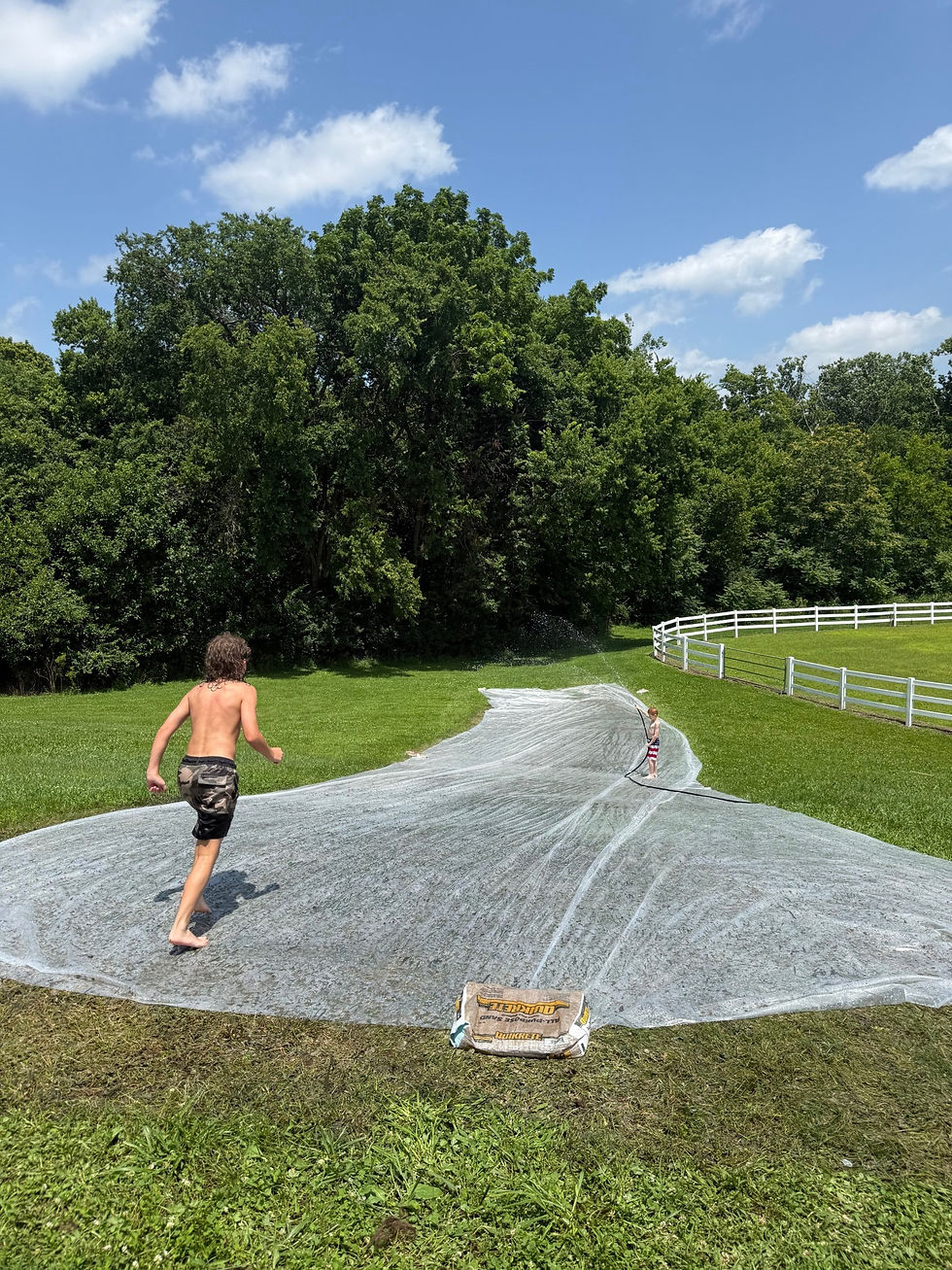
In Ohio County, that determination came with a healthy dose of fun. On a quiet afternoon between judging events, we found a group of 4-H kids making the best of the heat with a homemade slip-and-slide down the back hill of the fairgrounds. A giant roll of plastic, a garden hose and a steep grassy hill were all they needed. A short time later, still in wet swimsuits, those same kids could not wait to take us through the barns and introduce us to their animals. What began as a chance to cool off quickly became our own impromptu 4-H lesson as they proudly explained what they were raising and taught us more than a few things along the way.
That combination of hard work and friendship was something we noticed at fair after fair. For many 4-H families, fair week is much more than a few hours spent at the grounds. We met parents who had taken vacation time from work, families spending long days together in barns and show arenas, and younger children tagging along while meals and conversations were shared between events. Friendships built through years of 4-H become part of the rhythm of summer. Spend enough time at a county fair and it becomes clear that these families are not simply showing up for their own child’s project. They are watching out for one another.
We saw that especially clearly in Dearborn County, where older siblings who had aged out of 4-H were still right there at the ring, helping younger brothers, sisters and other members settle their nerves and feel comfortable before showing. They may no longer have been the ones holding the lead rope or waiting for the judge, but they were still very much part of the experience. It was a quiet example of the progression local 4-H leaders describe so often: young people begin as participants, gain confidence and eventually become the people encouraging someone coming behind them.
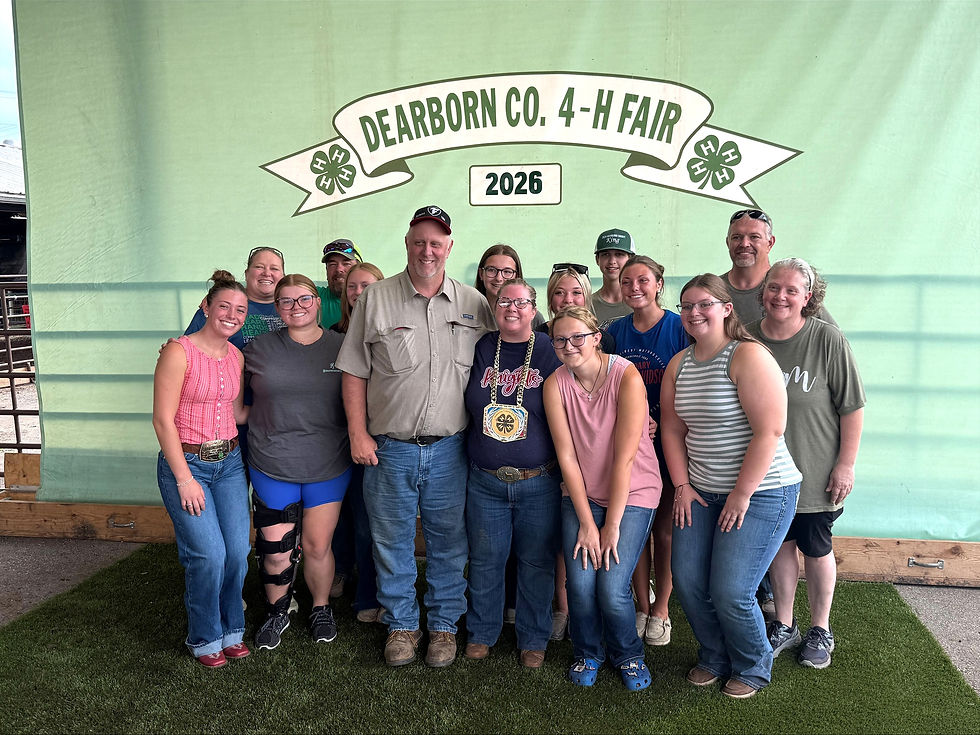
Dearborn County also offered one of the summer’s liveliest examples of how closely 4-H and the broader community are connected. A local celebrity showcase brought familiar educators together with local news, radio and weather personalities for an event that quickly became a crowd favorite. Hearing 4-H members enthusiastically cheer for some of their favorite teachers was a fun collision of two parts of their lives: the school community they know during the year and the fair community that becomes such an important part of summer. For a little while, there was no real distinction between the two. It was simply one community showing up for its kids.
Those experiences helped us see the county fair differently. The animals, exhibits and competitions matter, but so do the hours between them: the conversations in the barns, the older member helping someone younger, families catching up in folding chairs and kids finding a garden hose and a sheet of plastic when the afternoon gets too hot. Together, those moments show why fair week holds such an important place in many Southeastern Indiana communities.
Beyond the Fair
The fair is an important part of the 4-H experience, but local leaders are quick to point out that it is only one piece. Some of the most interesting examples of what 4-H looks like today are happening in workshops, classrooms, camps and Extension offices throughout Southeastern Indiana.
In Jennings County, young people themselves have a hand in shaping the livestock program through the Junior Livestock Committee. Representatives from different species work alongside the adult committee, help identify ways to improve the program and plan activities for other members. One of those is an annual workshop called Show Me the Way, where youth representatives give presentations to other 4-H’ers interested in showing livestock. The committee also organizes a Mini 4-H Rodeo before the county livestock auction, complete with stick horses and an obstacle course for some of the program’s youngest members.

In Switzerland County, a 4-H experience might involve a robot or 3D printer. The county is home to a STEM Design and Innovation Studio, one of only two located in Purdue Extension offices in Indiana. Young people can explore coding, robotics, engineering and digital design using Sphero robots, Dobots, SNAP Circuits, Indy Cars, 3D printers and Micro:bits. Weaver said the county reached 525 youth through formally reported educational programs and events in 2026, with instruction extending across STEM, healthy living, leadership development and workforce readiness.
Jefferson County is taking that connection between 4-H and future opportunities one step further by helping young people explore actual career pathways available close to home. This year, its 4-H & Ivy Tech Veterinary Career Experience gave 13 Indiana 4-H members an inside look at veterinary medicine and animal science. During the two-day experience, participants visited a working dairy farm, feedlot operation, animal hospital and college campus, meeting professionals and exploring the education, skills and day-to-day work associated with different careers.
Britt Copeland of Jefferson County said the program was intentionally built around the national Beyond Ready framework. Organizers wanted to highlight Ivy Tech Madison’s veterinary nursing program while also connecting students to local career paths they could pursue with that degree. “Our goal is to continue to complete high-quality programming like our Vet Career Experience that connects youth with career paths and builds soft skills such as leadership and communication within the 4-H program,” Copeland said. Jefferson County also hosted regional Beyond Ready programs focused on leadership and livestock during the year, including a leadership experience at Hanover College and a livestock program that drew participants from eight counties.
Those opportunities also cross county lines. Southeastern Indiana 4-H Camp served 257 campers this year, while more than 60 young people participated in regional camp counselor training focused on leadership, teamwork, safety and positive youth development. Switzerland County leaders say hundreds of their members have served as counselors at the regional camp over the past two decades, later carrying those skills into club officer positions, Junior Leaders and mentoring roles.
There Really is a Project for Everyone
The range of those experiences also challenges one of the persistent misconceptions about 4-H: that you need to live on a farm or raise an animal to participate. “There truly is a project for everyone,” Sarringhaus said. “Tell us what you’re interested in and we can help find a project to inspire your interests.” She is also quick to remind families that young people do not have to live on a farm to participate, with many non-animal project options available.

Some counties are working to introduce that variety even earlier. Ripley County’s growing Mini 4-H program serves children in kindergarten through second grade through opportunities such as a Mini 4-H Day Camp, weekly summer mailings and Mini 4-H showmanship during the fair. Jefferson County has also expanded opportunities for younger children through Mini 4-H Mondays and a full-day camp that combined animal science, STEM, outdoor recreation and activities led by older youth.
That progression, from a child trying something for the first time to a teenager helping someone younger, may be one of the clearest illustrations of what 4-H can do. A member might begin by completing a project or attending a camp, then gradually discover the confidence to speak in front of a group, lead a club, teach another member or explore a career they had never considered.
Community at Heart
None of that happens without adults willing to invest their time. Extension educators repeatedly point to volunteers, club leaders, families, fair boards and community partners as an essential part of the 4-H story. Jefferson County puts it simply: “Community is the Heart of the 4-H program here in Jefferson County.” In 2026, 94 registered volunteers helped host clubs, project-based learning experiences and the county fair. Their work can mean everything from providing weekly training sessions to repairing a roof damaged just before fair week or helping a child through the show ring.
The young people learn that same lesson about community involvement. In Jennings County, Biehle sees members discover “the value of contributing to your community.” In Switzerland County, youth serve as camp counselors, mentors, club officers and Junior Leaders. In Jefferson County, 4-H projects also found their way back into the community this summer when 62 animals and six boxes of produce from garden exhibits were donated to the House of Hope Food Pantry.
That sense of connection is especially meaningful in a region like ours. The seven counties served by Southeastern Indiana REMC have their own fairs, traditions and local programs, but young people routinely cross those county lines for camp, workshops, leadership programs and career experiences. The result is a program that is deeply local while also connecting young people with peers, mentors and opportunities throughout Southeastern Indiana.
From Corn Clubs to Coding
1904: Indiana 4-H traces its roots to Hamilton County, where school superintendent John Haines organized boys interested in learning how to grow corn. Ninety-three boys enrolled in that first Corn Club.
1911: A four-leaf clover with an H on each leaf became the designated emblem. The four H’s stand for Head, Heart, Hands and Health.
1915: The first 4-H club projects exhibited at the Indiana State Fair were market hogs.
1922: Indiana’s first 4-H camp was held near Evansville with 840 youth and 150 leaders in attendance.
1927: 4-H adopted the motto “To Make the Best Better,” and the 4-H pledge was adopted at the first National 4-H Camp in Washington, D.C.
1973: The words “and my world” were added to the end of the 4-H pledge.
Today: The learn-by-doing philosophy can still mean livestock, gardening or cooking, but it can also mean robotics, coding, photography, leadership, career exploration and much more.

What Remains After the Fair
By the end of summer, the livestock trailers had pulled away, exhibit halls had emptied and ribbons had gone home. But much of what was built through 4-H remained. We saw it in an older sibling calming a younger exhibitor outside the show ring. We heard it in kids proudly teaching us about their animals. We watched it in families who had rearranged work schedules and spent an entire week at the fairgrounds because this was something they did together.
Those experiences look different from county to county and from child to child, but they share something important. They give young people room to try, make mistakes, accept responsibility and discover what they can accomplish. Just as importantly, they give them a community in which to do it.

National 4-H Week gives us one week to celebrate those accomplishments. Across Southeastern Indiana, the learning, leading and growing happen all year long. After spending a summer with these young people and their families, we are proud to celebrate not only what they accomplished in 2026, but what they are becoming along the way.
Southeastern Indiana REMC is proud to support the young people and families who make 4-H an important part of our communities. The cooperative reimburses eligible member families for 4-H enrollment fees, up to $20 per participant.
To qualify, the 4-H participant’s primary residence must be within Southeastern Indiana REMC’s service territory and a parent or legal guardian must be an active REMC member.
Applications for the 2027 4-H Program will be accepted Oct. 1, 2026 through July 31, 2027.
Enrolling in 4-H? Visit seiremc.com/4h to submit your reimbursement request.


